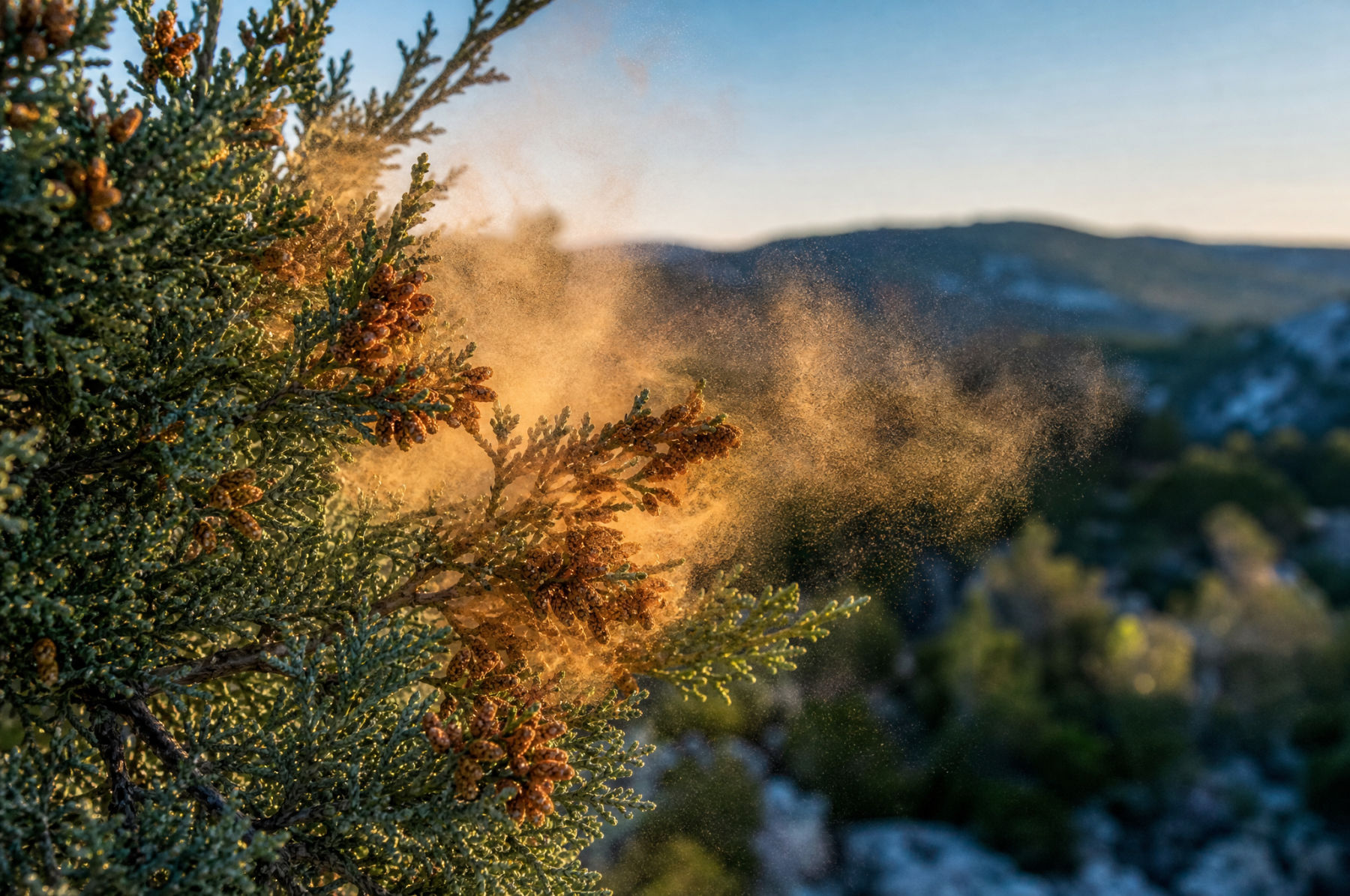
Every winter, mountain cedar fills the San Antonio air with pollen, and a lot of it follows you home. Here is how it gets in, and a room by room plan to clean it back out.
By MaidThis Northwest San Antonio ·· 6 minute read
The season, at a glance
Today
Nov
Dec
Jan
Feb
Mar
Mid December
The first hard cold fronts arrive and the male trees start to release.
Late December to mid January
The peak. On dry, windy days after a front, cedar pollen can drift like smoke off the hills.
February into March
Counts taper off. A good time to clear out what the season left behind.
A typical season. Each year moves with the weather, so check the daily pollen count on high days.
What cedar fever actually is
The tree behind it is Ashe juniper, which Texans call mountain cedar. It covers the Hill Country west and north of San Antonio, and in winter the male trees release enormous amounts of pollen. The grains are tiny and light, so the wind carries them for miles, straight into neighborhoods like Helotes, Leon Springs and The Dominion.
Cedar fever is the allergic reaction to that pollen. Congestion, sneezing, itchy eyes and that worn out feeling are the usual signs. Despite the name, it rarely brings a real fever.
How pollen gets inside your home
Closing the windows helps, but most pollen does not come through the glass. It rides in with the people and animals who live there.
On shoes
Tracked across entry floors and rugs, then kicked back into the air every time someone walks by.
On clothes and hair
Carried into the bedroom and onto pillows, where you breathe it all night.
On pets
A dog's coat after a walk holds a surprising amount, and it ends up on couches and beds.
Through the air system
Your HVAC pulls in outdoor air and circulates whatever the filter misses.
Through doors and windows
Every open door on a windy day lets a little more drift in and settle on sills.
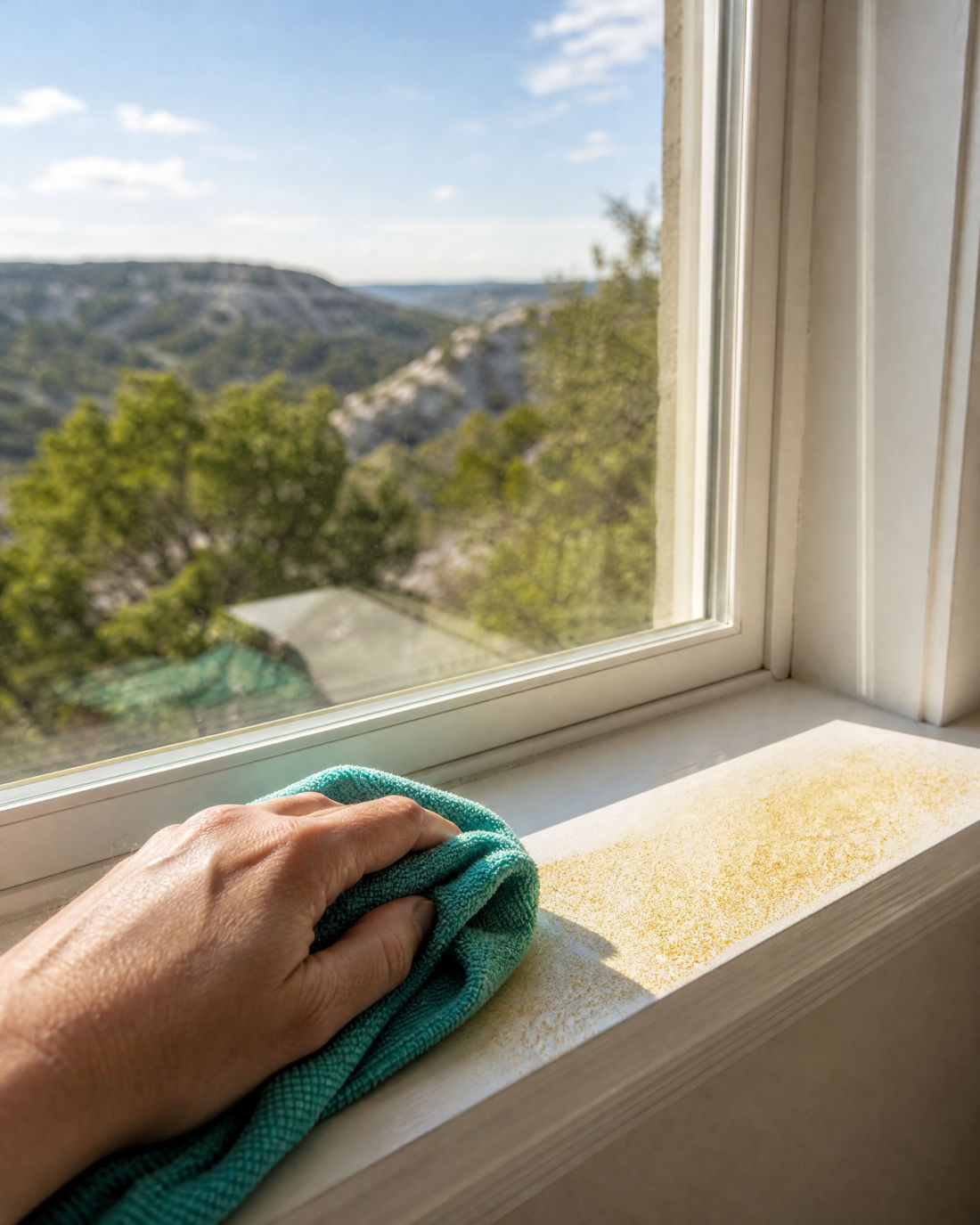
Wipe, do not dust. A damp cloth holds pollen. A dry one throws it back into the air.
The one rule that matters most
Clean pollen damp, never dry. A feather duster or a dry rag lifts fine pollen into the air, where it floats for hours and lands right back where it was. A lightly damp microfiber cloth traps it. The same goes for floors. A vacuum with a HEPA filter keeps what it picks up, while a broom mostly moves it around.
Your cedar season checklist
Room by room, for December through February. Tick things off as you go. We keep your ticks on this device.
0 of 0 done
When to deep clean
Early December, before it starts
Begin the season from a clean house. Clear the dust already sitting on sills, blinds, baseboards and vents so the first wave of pollen has nothing to add to.
Through the peak, keep it light and regular
Weekly damp dusting, vacuuming and hot water bedding keep pollen from building up while counts are high.
Late February or March, the reset
Once counts drop, clear what collected in the places weekly cleaning misses, then swap the air filter one more time.
Cedar fever questions
When is cedar fever season in San Antonio?
Mountain cedar usually starts releasing pollen in mid December, peaks from late December through mid January, and tapers off through February. Cold fronts set it off, so the start can move a week or two either way.
Is cedar fever an actual fever?
Usually not. Cedar fever is an allergic reaction to mountain cedar pollen, so it brings congestion, sneezing, itchy eyes and tiredness. It rarely causes a real fever. If you have a high fever, call your doctor, because something else may be going on.
Does cleaning really help with cedar fever?
It helps your home stop being a second source. Pollen comes in on shoes, clothes, hair and pets and settles on sills, floors and bedding. Removing it with damp cloths, a vacuum with a good filter and hot water laundry means you breathe less of it indoors.
Why is a damp cloth better than a duster?
A dry duster or feather duster lifts fine pollen back into the air, where it floats and settles again. A damp microfiber cloth traps it so it actually leaves the room.
How often should I change my air filter during cedar season?
Check it monthly from December through February and change it when it looks gray. A higher rated filter catches more pollen, but check what your system is built for before you upgrade.
When should I book a deep clean for cedar season?
Early December, before the pollen arrives, so the season starts from a clean house. Many people book a second one in late February or March to clear what the season left behind.
This guide is about keeping pollen out of your home, not medical advice. If symptoms are bad or a fever runs high, talk to your doctor or an allergist.
Start the season with a clean house.
Book online in minutes, or call and we will plan it with you.
AI assistant. Prices come from our live price list. By sharing your phone or email, you agree MaidThis may call, text or email you about your quote. Prefer a person? Call or text (210) 880-9541.